
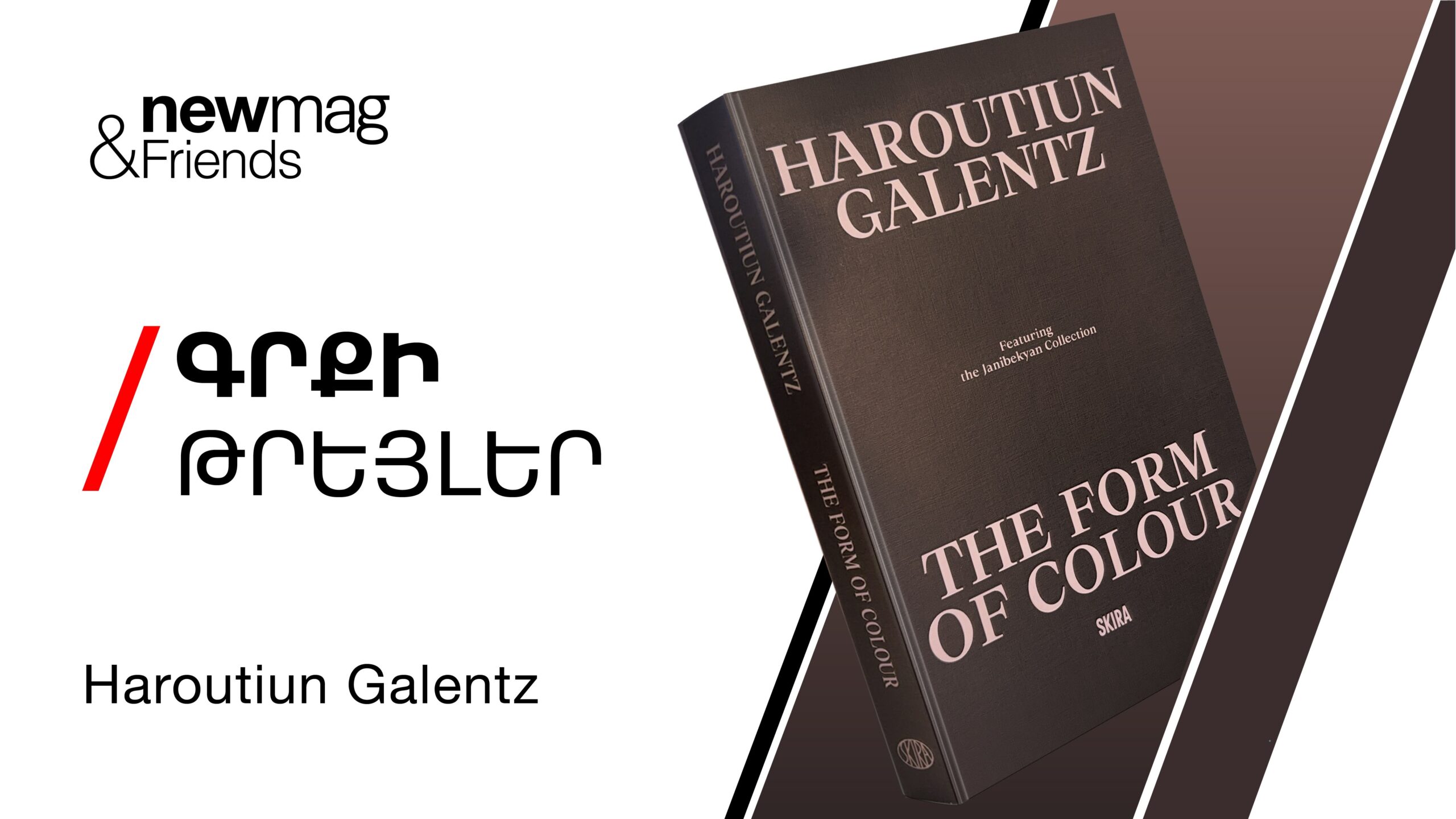
The Newmag & Friends series presents “Haroutiun Galentz: The Form of Colour”, a remarkable publication dedicated to one of the most original and influential figures of 20th-century Armenian art. The book was published by Skira, the renowned French art publisher that has been producing landmark books on the world’s greatest artists for nearly a century.
Its international journey began in Paris, where the book was officially launched at Skira’s bookstore in the heart of the city. The presentation introduced readers to the full scope of Haroutiun Galentz’s artistic journey, from his years in Lebanon to his creative legacy in Soviet Armenia.
The authors, art historians Vardan Karapetyan and Marie Tomb, spent years researching previously unexplored archives, personal correspondence, family memoirs, museum collections, and private archives. Their work reconstructs not only Galentz’s life story but also offers a comprehensive view of his artistic vision and intellectual world.
The richly illustrated volume features more than 150 paintings, sketches, photographs, and rare archival documents, allowing readers to rediscover Galentz’s work, better understand his place within Soviet nonconformist art, and appreciate the universal significance of his artistic legacy.
The publication is also based on an exceptional collection assembled at the initiative of Artur Janibekyan. Following the collapse of the Soviet Union, Galentz’s works became scattered across numerous countries and private collections. This project reunites many of those masterpieces alongside works preserved in museums and private collections throughout Armenia, Europe, Asia, and North America.
For Vardan Karapetyan, the project began while researching the Armenian nonconformist movement of the 1960s, when he repeatedly encountered Galentz’s paintings in different collections. That discovery grew into years of research, ultimately resulting in this comprehensive volume.
Marie Tomb first encountered Galentz while studying the art of Lebanon during the first half of the twentieth century, recognizing him as an important figure within the broader cultural history of the Middle East.
Haroutiun Galentz’s life was marked by tragedy, and those experiences profoundly shaped his art. Born Haroutiun Harmandayan, he survived the Armenian Genocide as a child. His mother managed to save her four sons by bringing them to Aleppo, but she died shortly afterward, leaving the children in an American orphanage.
These early hardships became a powerful source of artistic expression, shaping the vibrant visual language and deeply humanistic worldview that define Galentz’s work.
His artistic journey spans Lebanon and Armenia, embracing Beirut’s rich cultural life, the ideological constraints of Soviet art, and eventual international recognition. In his paintings, color and form become far more than artistic elements, they become expressions of memory, freedom, resilience, and human dignity.
“Haroutiun Galentz: The Form of Colour” is much more than an art album. It is at once a biography, a scholarly study, and a cultural document that reexamines the place of one of Armenia’s greatest artists within both Armenian and world art history.